
Why Finding an English-Speaking Cleaner in Indonesia Is Hard
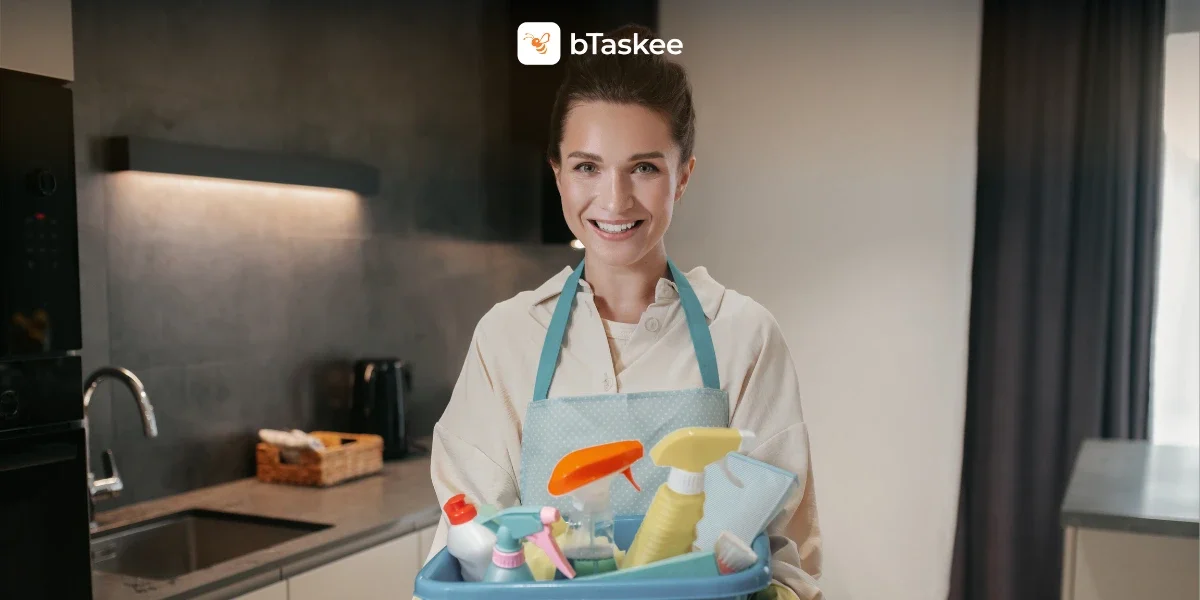
Relocating to or living in Indonesia as an expatriate comes with incredible cultural experiences, but managing a household can quickly become frustrating when communication breaks down.
Navigating language barriers while trying to explain how to care for delicate countertop materials, operate modern appliances, or handle specific laundry instructions often turns routine chores into a stressful daily ordeal.
The core difficulties in finding an English-speaking house helper stem from structural education gaps, overseas talent migration, cultural communication nuances, and intense competition within expat communities.
This article examines why finding an English-speaking home cleaner in Indonesia is so challenging, explores practical strategies to bridge the communication gap, and highlights modern alternatives for maintaining a spotless home without language stress.
Book bTaskee’s professional home cleaner now!
Why Is Sourcing Bilingual Domestic Help So Challenging?
While domestic help (Pembantu Rumah Tangga or PRT) is widely accessible and affordable across Indonesian urban centers, helpers with fluent or even conversational English proficiency remain a scarce resource.
Understanding the underlying causes helps set realistic expectations when you prepare to hire cleaning help in Indonesia.
1. Educational Gaps and Limited Language Exposure
The vast majority of domestic workers in Indonesia originate from rural regions where secondary education may be limited and localized dialects (such as Javanese, Sundanese, or Balinese) are spoken alongside Bahasa Indonesia.
Traditional vocational preparation for domestic staff focuses on practical labor rather than foreign language acquisition.
While educational initiatives aim to expand English learning in primary schools nationwide, the current adult labor pool consists predominantly of individuals who had minimal exposure to English during their formative schooling.
Most domestic helpers who do speak English acquired it entirely through hands-on experience in previous foreign or expatriate households rather than formal instruction.
2. High Competition and Overseas "Brain Drain"
When an experienced English-speaking home cleaner becomes available, usually because their current employer is relocating, they rarely stay unattached for long.
Word-of-mouth networks in expatriate Facebook groups, neighborhood forums, and school communities ensure that bilingual helpers are hired almost instantly.
Skilled Indonesian domestic helpers who achieve fluent English or formal hospitality training frequently choose to work abroad.
Destination markets such as Singapore, Hong Kong, and the Middle East offer significantly higher earning structures compared to local market rates. This steady outflow continuously drains the local market of top-tier bilingual talent.
3. Cultural Nuances and Communication Anxiety
Language barriers in Indonesia extend beyond simple vocabulary differences; they intersect deeply with local cultural norms regarding politeness, hierarchy, and social harmony (ewuh pakewuh).
A study shows that some local cleaners deliberately avoid taking bookings from foreign clients because they feel anxious about their inability to speak English.
When a helper feels self-conscious about their language skills, they may nod politely out of respect while remaining uncertain about your exact preferences, leading to unintentional errors.
4. Mismatched Expectations on Cleaning Standards
Western expatriates and local Indonesian households often hold different implicit expectations regarding cleaning methodologies and appliance usage.
Modern front-loading washers, automated dishwashers, induction cooktops, and specialized vacuum filters require explicit operating knowledge. Helpers without prior international household exposure may be unfamiliar with these tools.
Also, distinguishing between acid-based tile cleaners, neutral multi-surface sprays, and delicate wood polishes is critical. Miscommunication regarding chemical application can result in permanent damage to marble floors or stainless steel fixtures.
Expat households often prioritize deep sanitization, surface decluttering, and systematic dust removal, whereas traditional local routines may focus heavily on daily sweeping, mopping, and ironing.
Familiarizing yourself with general apartment cleaning standards in Indonesia can help bridge the expectation gap and align your helper's workflow with your household needs.
5. Limitations of Traditional Agencies
Relying on traditional domestic worker agencies (yayasan) often presents another layer of difficulty. Many traditional agencies prioritize placement volume over rigorous skill matching or language screening.
They rarely provide transparent background verifications, structured performance records, or formal language assessments, leaving employers to handle training and vetting entirely on their own.
Financial and Practical Realities: The Expat Wage Premium
Because bilingual talent is limited, compensation expectations reflect market demand.
In major metropolitan areas such as Jakarta, Surabaya, and Bali, standard live-out house helpers earn wages aligned with local regional minimum rates (UMR). However, experienced helpers with proven English communication skills and familiarity with expatriate standards command a substantial premium.
Standard Local Helper (Live-Out): Typically ranges around local minimum wage levels depending on hours and responsibilities.
Experienced English-Speaking Helper: In prime residential areas of Jakarta (such as Kemang, Pondok Indah, or Senopati) and expat pockets of Bali, full-time bilingual helpers often command monthly salaries ranging from IDR 4,000,000 to IDR 5,500,000+.
While paying a premium guarantees easier daily communication, it does not automatically eliminate issues such as sudden absenteeism, schedule inflexibility, or contract termination when an expat family leaves the country.
Practical Strategies for Navigating the Language Gap
If you are currently managing a household with a cleaner who speaks limited English, relying solely on verbal communication can lead to frustration. Implementing structured, visual workarounds can significantly streamline your daily interaction.
1. Build Visual Task Checklists
Rather than giving lengthy verbal instructions, create a clear visual guide for your home:
Take photos of how specific rooms, organized pantries, or made beds should look.
Label cleaning products with color-coded stickers (e.g., Green for kitchen counters, Blue for glass, Red for bathroom tiles).
Print a simple daily/weekly checklist translated into Bahasa Indonesia using basic terms.
2. Utilize Digital Translation and Voice Messaging
Indonesian culture responds very well to polite, written messaging. Use messaging apps like WhatsApp to send structured text instructions via translation tools. Written Bahasa Indonesia is generally straightforward for helpers to read and process.
Another tip is to use voice-to-text translation features for quick, real-time clarifications rather than speaking rapidly in English.
3. Focus on Core Attitude Over Initial Language Skills
When hiring individual helpers, prioritizing punctuality, honesty, thoroughness, and a willing attitude is often more productive than hunting solely for fluent English. Teaching basic cleaning-specific English phrases to a dedicated, trustworthy worker is frequently easier than correcting poor cleaning habits in a fluent speaker.
Streamlining Household Care with bTaskee Professional Services
Navigating the traditional hiring market, conducting interviews, negotiating wages, and overcoming language hurdles can require weeks of effort. For busy expatriates, remote professionals, and families seeking immediate, hassle-free solutions, bTaskee offers an innovative, tech-driven alternative.
As a leading professional home cleaning service platform operating extensively across Indonesia, bTaskee removes the friction traditionally associated with sourcing reliable domestic help.
Key Advantages of bTaskee for Expat Households:
Seamless English Interface & Support: You do not need to speak fluent Bahasa Indonesia to book a clean. The bTaskee mobile application is fully accessible in English, allowing you to select services, customize cleaning notes, set schedules, and manage bookings in seconds. If you ever need assistance, bTaskee's responsive Customer Support team handles communications swiftly.
Strict Vetting and Security Measures: Safety and privacy are paramount when inviting someone into your home. bTaskee Taskers complete rigorous background checks, face-to-face interviews, and identity verification. For added peace of mind, clients can verify their assigned Tasker’s identity upon arrival using the app's QR code scan feature.
Transparent, Bargain-Free Pricing: Eliminate the uncertainty of wage negotiations and agency fees. bTaskee displays exact, fixed rates upfront before you confirm your order. What you see on the screen is what you pay, no unexpected add-ons or hidden charges.
7-Day Satisfaction & Safety Guarantee: bTaskee backs its services with a core 7-day guarantee. If a cleaning session does not meet your expectations, bTaskee arranges a re-clean at no additional cost. Furthermore, the guarantee includes protection policies for property care, giving you total peace of mind.
Full Equipment and Cleaning Supplies Included: Forget about stocking up on expensive cleaning supplies or worrying whether the correct products are being used. Taskers arrive fully equipped with modern tools and specialized cleaning agents suited for various household surfaces.
Flexibility Across Major Indonesian Cities: Whether you need an instant on-demand session with as little as 90 minutes' notice or a recurring weekly subscription, bTaskee caters to your schedule. Services are available across primary expat hubs, including Jabodetabek, Bali (Denpasar, Ubud), Bandung, Surabaya, Yogyakarta, Semarang, and Sleman.
Kesimpulan
Overcoming the difficulties in finding an English-speaking house helper does not have to compromise your comfort or consume your valuable weekends. While traditional recruitment channels can be slow, unpredictable, and expensive, modern technology makes keeping a clean, healthy living space straightforward and stress-free.
Whether you need a routine home refresh, a deep clean, air conditioning maintenance, or upholstery care, you can secure dependable, professional help with just a few taps on your smartphone.
Take back your free time and experience transparent, top-tier home care today. Download the bTaskee app on the App Store or Google Play Store, and book your professional home cleaning service in minutes!
Share this post!