
Why Disinfecting Your Home Post-Flu is Crucial in the Tropics
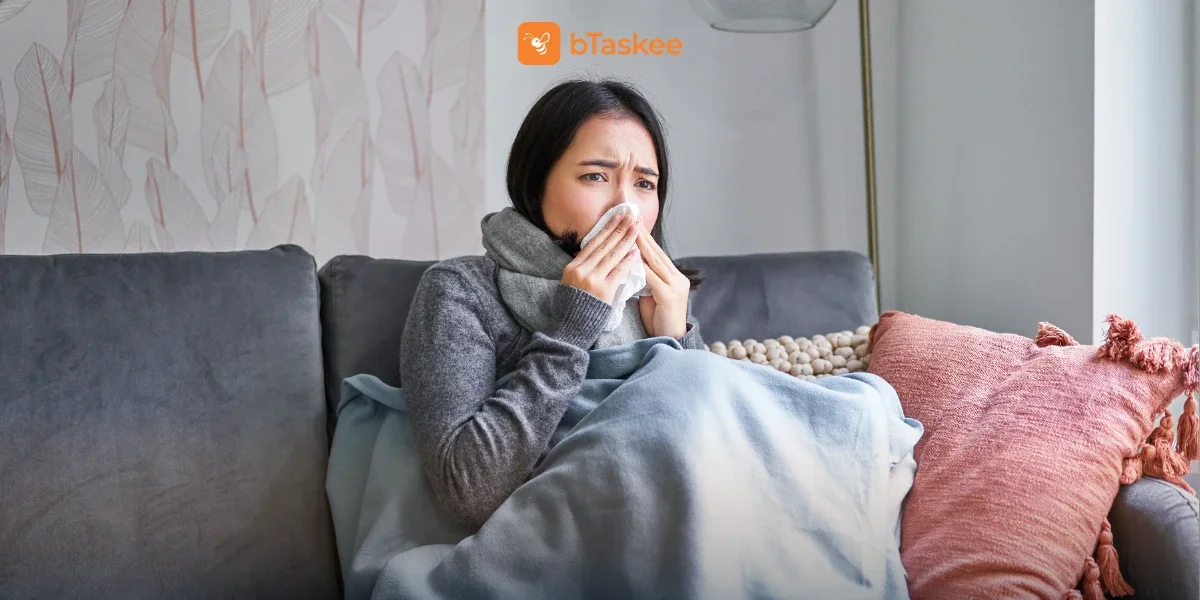
Living in a tropical environment like Jakarta or Bali often means dealing with a relentless, revolving door of family illnesses.
You watch helplessly as a cold, flu, or stomach bug circulates from your child coming home from international school, to your spouse, your domestic helpers, and finally to you, only for the cycle to threaten to repeat itself just as everyone begins to recover.
To permanently break this chain of transmission, families must implement a comprehensive "post-flu reset" by systematically disinfecting high-touch surfaces and neutralizing airborne reservoirs of pathogens.
Just as commercial evidence proving a professionally cleaned workspace reduces sick days guides corporate health policies, implementing a disciplined, clinical-grade sanitization routine at home is the single most effective way to protect your loved ones from continuous reinfection.
Book bTaskee’s disinfection service now!
Why Post-Flu Disinfection Requires Extra Rigor in the Tropics
When an infectious illness strikes your household, simply waiting for symptoms to clear up before returning to your normal routine is a dangerous gamble. In equatorial climates, the physical environment itself works against your family's immune recovery.
1. High Humidity Facilitates Pathogen Survival
Influenza and respiratory viruses do not simply disappear when a patient's fever breaks. Instead, they can remain highly infectious on hard surfaces for hours to several days. In Indonesia, where relative humidity levels consistently hover between 75% and 85%, this problem is significantly magnified.
The combination of warm temperatures and ambient atmospheric moisture acts as a highly efficient incubator, allowing moisture-loving organic matter and bacterial biofilms to form breeding grounds on damp surfaces where viruses can cling and survive far longer than they would in cooler, drier climates.
2. Sealed, Air-Conditioned Spaces Circulate Pathogens
In urban high-rises and modern villas, families rely heavily on air conditioning to escape the outside heat.
The Trap Effect: Keeping doors and windows locked tight to preserve cold air creates a closed loop.
Aerosol Buildup: Without fresh air exchange, airborne viral droplets and micro-particles remain suspended in the breathing zone, settling on furniture and recirculating through HVAC filter systems.
3. Elevated Risks of Secondary Infection
The physiological recovery period is a time of high vulnerability. When your body has spent days fighting off a primary viral infection, your local respiratory tract defenses and overall immune system are severely depleted.
If the living space is not thoroughly neutralized, family members are highly susceptible to secondary opportunistic bacterial infections or reinfection. To prevent this, hiring top home disinfection services can ensure that lingering viral particles on household touchpoints are fully eliminated.
Identifying Your Home's Critical "Germ Hubs"
To conduct an effective post-illness deep clean, you must look past basic visual tidying. True sanitization requires targeting the high-touch surfaces where microscopic pathogens actively congregate.
Hard Surfaces and Furniture Touchpoints
According to epidemiological research published by the World Health Organization (WHO), hand-to-surface-to-mouth contact is a primary vector for viral transmission.
This includes stair handrails, dining table edges, and desk surfaces. Not only that, every doorknob, drawer pull, and cabinet handle touched by an ailing family member remains a highly active vector.
Personal Electronics and Remotes
Our hand-held devices are some of the dirtiest objects we own, yet they are rarely cleaned. Smartphones, tablets, laptop keyboards, and television remote controls are constant breeding grounds.
Also, the subtle heat generated by active electronic components further stabilizes pathogens, making daily sanitization of these items essential.
Bathroom Fixtures and Dry Zones
The wet, humid nature of tropical bathrooms makes them a prime contamination zone. Focus heavily on toilet flush levers, faucet taps, vanity countertops, and the handles of bathroom doors, which carry some of the highest microbial counts in the home.
Linens, Bedding, and Soft Textiles
Throughout the course of an illness, sheets, pillowcases, bolster covers, and bath towels absorb sweat, respiratory droplets, and skin cells.
Bolster pillows, highly popular in Indonesian households, are held close to the face and mouth for hours, capturing massive concentrations of pathogens. Other than that, children’s favorite plush toys and soft blankets frequently harbor germs and require rigorous high-temperature laundering.
The Step-by-Step Tropical Reset Protocol
To thoroughly sanitize your home and safeguard your family from reinfection, you must follow a structured, clinically proven process. Merely spraying a chemical and immediately wiping it away will not suffice. Here are the steps to reset your home after illness:
Step 1: Open Up Air Ventilation
Before applying any chemical agents, turn off all air conditioning units and throw open your windows and balcony doors. Allowing fresh tropical air and natural sunlight to circulate for 1-2 hours pushes stagnant, pathogen-dense indoor air out of the apartment while reducing ambient chemical fumes.
Step 2: Wash Linens and Soft Toys at High Temperatures
Strip all beds, pillowcases, bolster covers, and towels used during the illness. Here’s what you need to do for each item:
Launder all textiles using a hot water cycle set to at least 60 oC along with a premium laundry detergent.
Avoid shaking dirty laundry before loading it into the washing machine. Shaking bedsheets aggressively can launch dried viral particles back into the air, where they can be inhaled.
Toss children's washable plush toys into the machine using a warm-to-hot water cycle, and air-dry them completely in direct sunlight.
Step 3: Sanitize Hard Surfaces Using Proper "Dwell Times"
Wipe down all high-touch hard surfaces with a soap and water mixture first to remove organic dust, then follow up with an EPA-registered disinfectant. What you need to do:
If using household bleach, mix a precise solution of 4 teaspoons of chlorine bleach per 1 liter of room-temperature water.
Sprayed or wiped disinfectants must remain wet on the surface for a designated duration, typically 3-10 minutes, to chemically compromise and neutralize the target viruses. Wiping the chemical off immediately defeats its clinical purpose.
Step 4: Disinfect Delicate Personal Electronics
The next step is to power down all mobile devices, tablets, and remote controls. Wipe them thoroughly using soft microfiber cloths dampened with 70% isopropyl alcohol wipes. Never spray liquid disinfectants directly onto electronic ports or screens to prevent short-circuiting.
Step 5: Replace or Sterilize Personal Care Items
For the last step, you need to immediately discard toothbrushes used during the illness to prevent oral reinfection. If you cannot immediately replace them, soak the brush heads in an antiseptic, alcohol-based mouthwash for several minutes to lower the pathogen load.
Critical Sanitization Mistakes to Avoid
Executing a post-flu reset incorrectly can result in chemical hazards or an incomplete clean that leaves pathogenic strongholds intact. Here are a few things you need to avoid when sanitizing your house after illness:
Wiping Disinfectant Immediately: A common mistake is immediately drying a sprayed surface. If a surface does not remain wet for its required dwell time, pathogens survive the chemical exposure intact.
An Incorrect Cleaning Direction: Never begin your cleaning routine in the sickroom. You must always clean from the cleanest areas of your home toward the dirtiest zones. Starting in the contaminated room and moving outward will carry active virus particles on your gloves, clothes, and cleaning cloths straight into common living spaces.
Dangerous Chemical Mixing: Never mix household bleach with ammonia, vinegar, or acidic glass cleaners. This reaction produces highly toxic chloramine gas, which can cause severe respiratory damage and eye irritation.
Ignoring Post-Clean Hygiene: Once your disinfection protocol is complete, immediately discard your disposable gloves, wash your hands with soap and flowing water for at least 20 seconds, and change your clothes.
Why Home Hygiene Needs Commercial-Grade Rigor
While corporate leaders understand that a highly disciplined and clean workspace reduces sick days at the office, many neglect to apply this same level of operational rigor to their personal residences.
In a professional setting, business owners proactively hire commercial office cleaning services to limit employee absenteeism, protect operational momentum, and keep productivity high.
However, your home is also a vital, high-functioning environment where family members, domestic helpers, and guests interact daily. If you do not apply the same level of scientific sanitization at home that professional office cleaning services apply to commercial workspaces, the health and productivity of your household will suffer.
Clinical data have shown that a systematically cleaned workspace reduces sick days among employees. Similarly, applying this disciplined perspective to your personal residence protects your children, stabilizes your household staff, and preserves your family's vital energy.
Get a Professional Disinfection Service with bTaskee
Managing a thorough, clinical-grade chemical disinfection while caring for a recovering family and balancing a demanding career can feel overwhelming. This is why busy expatriates and modern homeowners trust bTaskee’s disinfection services to handle their deep sanitization needs.
Rather than operating as a simple matching platform, bTaskee sets a new industry standard in Southeast Asia by thoroughly training and vetting its partners to meet strict international guidelines of home hygiene, safety protocols, and corporate hospitality.
When you request a professional disinfection service, a highly trained crew arrives at your door equipped with advanced sanitization tools, personal protective equipment (PPE/APD), and hospital-grade, eco-safe disinfectants.
Whether your home requires a thorough deep cleaning of carpets and upholstery to combat tropical humidity, meticulous touchpoint disinfection following a seasonal flu, or a complete structural reset, bTaskee’s professionals execute every step with scientific precision.
By delegating the physical labor and chemical handling to certified experts, you ensure your apartment is restored to a safe, pristine, and comforting sanctuary without exhausting your own limited physical and mental energy.
Secure Your Household Sanctuary Today
Reclaiming your home from the endless cycle of tropical illnesses is a major milestone in establishing long-term comfort and peace of mind in Indonesia. Your apartment should not be a source of health anxiety. It must be the safe, restorative refuge where you and your children recharge, play, and thrive.
If you are ready to experience the life-changing benefits of a clinical-grade, stress-free sanitization session in the comfort of your own living room, let bTaskee serve as your dedicated helper for home wellness.
Download the bTaskee app on the Google Play Store or Apple App Store today, customize your post-flu recovery package, and restore your family's physical balance tonight.
Share this post!