
Targeted Muscle Relief for Stressed-Out Professionals
To permanently reverse commute-induced physical degradation and chronic muscular pain, urban professionals must systematically target deep neuromuscular constriction through a combination of daily alignment drills, passive spinal decompression, and targeted trigger-point therapy that restores blood flow to oxygen-deprived tissues.
Relying on passive rest is insufficient. Reversing the structural damage of prolonged sitting or standing requires active, physiological intervention to prevent long-term postural deformation.
For expatriates and local corporate leaders navigating the intense, daily gridlock of Jakarta (whether trapped in the back of a Bluebird taxi on Jalan Sudirman, balancing on a shifting TransJakarta bus, or weaving through traffic on an Ojek) the journey is more than a test of patience.
It is a grueling physical bottleneck. Hours spent in static, cramped positions force your musculoskeletal system into unnatural configurations, leading to severe shoulder rounding, hip flexor shortening, and a constant accumulation of stress hormones that drain your vital energy before your workday even begins.
Book a professional home massage session now!
Strained Muscle after Commuting: Where It Hurts and Why
Different modes of transport subject the human body to distinct structural stresses. Understanding exactly how your specific commute damages your muscular alignment is the first step toward effective rehabilitation.
The Driver's Strain (Car & Ride-Hailing Passengers)
Sitting in a car seat for consecutive hours, especially in low-support seats common in many vehicles, forces the pelvis into a posterior tilt. This flattening of the natural lumbar curve places immense, uneven pressure on your lower intervertebral discs.
Forward-Rounded Shoulders: Reaching for the steering wheel or holding a smartphone causes the pectoral muscles to tighten and shorten, pulling the scapulae forward.
Shortened Hip Flexors: Keeping your right foot hovering over the accelerator and brake pedals locks your psoas and iliacus muscles in a continuously contracted state, which pulls on your pelvis and flares lower back pain when you stand up.
The Motorcyclist's Tension (Ojek & Personal Bikes)
Operating a motorcycle or riding pillion on an Ojek requires constant, hyper-vigilant micro-adjustments to balance against uneven road surfaces and sudden stops.
Forearm and Wrist Grip Tension: Firmly clutching the handlebars or holding onto the rear grab bar keeps the forearm flexors in isometric contraction, leading to repetitive strain injuries.
Hyperextended Cervical Spine: Leaning forward into the wind forces your neck muscles, particularly the splenius capitis and upper trapezius, to overwork just to keep your head upright, compressing the cervical vertebrae.
The Transit Standee's Fatigue (KRL Commuter Rail & TransJakarta)
Standing on a moving transit vehicle presents a highly dynamic balance challenge that exhausts the stabilizing muscles of the lower body and core.
Rotator Cuff Strain: Gripping overhead straps or handrails to brace against sudden braking forces your shoulder stabilizer muscles to bear sudden, jarring loads.
Spinal Compression & Venous Pooling: Standing on hard, vibrating metal floors for over an hour compresses the spine and causes blood and lymphatic fluid to pool in your lower extremities, resulting in a heavy, aching sensation in your calves and ankles.
Active Desk-Friendly Interventions to Break the Cycle of Tension
You do not have to wait until the end of the day to begin repairing your posture. Integrating targeted mobility movements into your workday actively breaks the pattern of muscle shortening.
Desk-Friendly Mobility Drills (No Equipment Needed)
Executing these four highly specific mobility drills during your morning coffee break can significantly reverse the physical damage of your morning commute.
The "De-Hunch" Neck Stretch
Target Muscles: Upper trapezius and levator scapulae (relieves tension from gripping wheels or handlebars).
What You Need to Do: Sit tall with your spine neutral. Drop your shoulders down, grab the edge of your chair with your right hand, and gently lower your left ear toward your left shoulder. For a deeper stretch, gently place your left hand on your head to guide it down. Hold for 20 seconds, then switch sides.
Seated Figure-4 Stretch
Target Muscles: Gluteus medius, piriformis, and deep hip rotators (relieves deep hip tightness from prolonged sitting).
What You Need to Do: Cross your right ankle over your left knee, forming a "4" shape. Keep your spine perfectly straight. Slowly hinge forward from the hips, keeping your chest open, until you feel a deep stretch in your right glute. Hold for 30 seconds per side.
Behind-the-Back Chest Opener
Target Muscles: Pectoralis major and anterior deltoids (counters the forward-slouching posture).
What You Need to Do: Sit or stand tall. Interlace your fingers behind your lower back. Straighten your arms and gently lift your hands upward while squeezing your shoulder blades tightly together. Hold for 20 seconds while taking deep, diaphragmatic belly breaths.
Desk Calf and Achilles Stretch
Target Muscles: Gastrocnemius and soleus (relieves calf stiffness and improves lower extremity circulation).
What You Need to Do: Stand up and place both hands firmly on your desk. Step your right foot back, keeping the heel pressed flat into the floor and the leg straight. Lean your hips forward until you feel a deep stretch in your calf. Hold for 20 seconds, then repeat on the left side.
Micro-Relief While Trapped in Traffic
If you find yourself completely stationary in bumper-to-bumper traffic, you can utilize the discrete isometric techniques to prevent your muscles from seizing up:
Use a Lumbar Roll: Place a small, rolled-up towel or a dedicated lumbar cushion in the natural curve of your lower back to maintain proper spinal alignment.
Cervical Isometric Press: Press the back of your head firmly against your car seat headrest for 5 seconds, then release. Repeat this 5 times to activate and support tired neck stabilizers.
Alternating Shoulder Rolls: Roll your shoulders backward in a slow, circular motion 10 times to open up your chest and restore blood flow to the upper back.
Evening Routine You Must Try for Muscle Recovery
Many professionals view bodywork as a seasonal indulgence or a luxury spa experience. However, when subjected to the chronic, daily stress of a metropolitan commute, regular targeted massage for muscle relief becomes an essential biological necessity.
Hot Shower (5 min) → Foom Roll/Tennis Ball (3 min) → Passive Floor Stretch (2 min)
Combining heat therapy, myofascial release, and passive rest triggers a profound neurological reset. When your body is subjected to a stressful commute, your sympathetic nervous system spikes cortisol, causing systemic vasoconstriction (narrowing of blood vessels). This restricts oxygen delivery to your muscles, facilitating the buildup of painful lactic acid.
A structured physical intervention reverses this state by:
Activating the Parasympathetic State: Lowering blood pressure and dilating blood vessels to flush metabolic waste from deep tissues.
Breaking Myofascial Adhesions: Mechanically separating bound muscle fibers, which restores muscle elasticity and normalizes joint range of motion.
Promoting Deeper Sleep Cycles: Stimulating the sensory pathways that produce serotonin, the direct biochemical precursor to sleep-inducing melatonin.
Choosing The Right Type of Massage for Your Body Pain
Not all massage techniques are optimized for treating structural posture issues. Matching your specific symptoms to the correct modality is vital to maximizing your physical recovery.
Deep Tissue Massage: Dissolving Chronic Postural Knots
For professionals dealing with long-term rounded shoulders and persistent lower back pain, a deep tissue session is highly recommended. By applying slow, deliberate strokes and deep finger pressure, a therapist can target the sub-layers of muscle and fascia.
Utilizing a professional massage for muscle relief ensures that stubborn adhesion points (myofascial trigger points) along the erector spinae, rhomboids, and levator scapulae are thoroughly broken down.
Foot Reflexology: Reversing Lower Extremity Edema
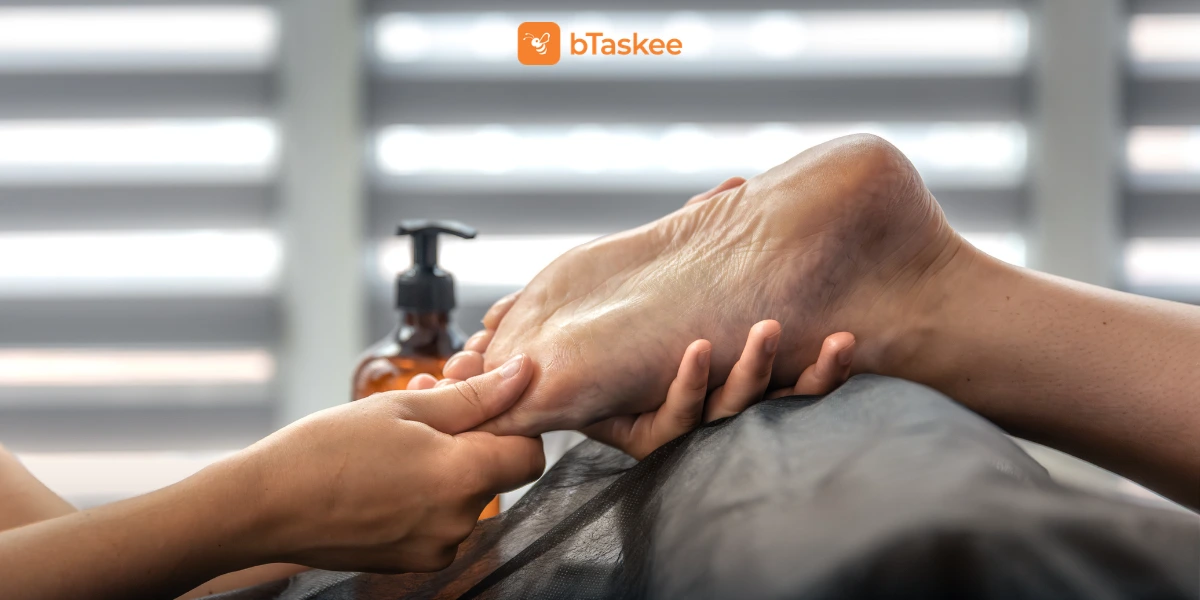
If your commute involves standing for long stretches on the train or bus, your cardiovascular system has to work twice as hard to pump blood back up to your heart. Reflexology applies targeted pressure to the reflex zones of the feet, instantly stimulating local circulation, clearing lymphatic congestion, and reducing heavy ankle swelling.
Guided Stretching (Thai-Style Bodywork): Spinal Decompression
Combining rhythmic acupressure with passive joint manipulation, guided stretching is highly effective for decompressing a compacted spine. The therapist uses their body weight to safely guide your joints through their natural range of motion, stretching shortened hip flexors and releasing tension in the deep rotators of the hips.
Seamless and Premium Wellness with bTaskee’s Home Massage Services
The ultimate irony of seeking physical relief from a grueling commute is the journey itself. Battling through an hour of stressful, exhaust-choked traffic to reach a premium spa clinic often undoes all the therapeutic benefits of the massage before you even make it back home.
This clear operational bottleneck is why busy expatriates and high-performing executives are turning to elite home-based solutions. With bTaskee, you can eliminate the travel barrier and transform your temporary apartment or residence into a private wellness sanctuary.
Rather than acting as a simple, unvetted matching directory, bTaskee sets a new industry standard in Indonesia by meticulously training and vetting its partners to meet international levels of physical therapy, customer care, and strict sanitary protocols.
When you book a session, a highly trained therapist from their professional home massage services arrives directly at your door equipped with premium, natural botanical oils and advanced anatomical training.
Whether you require a powerful deep tissue session to unlock compressed lumbar vertebrae, a restorative foot reflexology treatment to relieve swollen ankles, or an aromatic wellness session to melt away mental stress, bTaskee delivers a premium, spa-grade experience without requiring you to step foot in the chaotic Jakarta traffic.
By outsourcing the transit and letting the therapist come directly to you, you save your limited physical and mental energy for what truly matters, establishing bTaskee as your ultimate domestic partner.
Step Into a Pain-Free, Balanced Lifestyle
Do not let the physical strain of your daily commute dictate your health, your posture, and your long-term physical potential.
By taking a proactive approach to your musculoskeletal health and supporting your nervous system with targeted therapeutic bodywork, you can actively wash away the stress of the road and step into your home feeling restored, relaxed, and fully in control of your wellbeing.
If you are ready to experience the life-changing benefits of a premium, stress-free recovery session in the comfort of your own living room, let bTaskee serve as your dedicated, reliable wellness partner. Download the bTaskee app on the Google Play Store or Apple App Store today, customize your home wellness session, and reclaim your physical balance tonight.
Share this post!