
How to Clean a Gas Stove: 7 Steps to Remove Grease and Stubborn Burnt Stains

A gas stove is one of the fastest areas in the home to get dirty. After just a few weeks of cooking, the grates can become covered with black burnt residue, the stovetop can become greasy, while clogged burner holes may cause weak or uneven flames.
Many people avoid cleaning their gas stove because they are worried about damaging it or simply don't know where to start. In fact, with the right method and a few simple household ingredients, you can clean your gas stove in around 30–45 minutes.
In this guide, bTaskee will show you how to clean a gas stove step by step, along with important safety tips that are often overlooked.
Before You Start: 5 Gas Stove Cleaning Safety Rules
This is the most important part. Don't skip it.
1. Turn off the stove and close the gas valve.
Always close the gas valve before removing or cleaning any stove components.
2. Wait until the stove is completely cool.
Pouring water or a cold cleaning solution onto a hot stove can cause burns and may crack a glass surface.
3. Keep water away from the burner ports and gas tubes.
Water entering these areas is a common reason why a gas stove may fail to ignite after cleaning.
4. Make sure everything is completely dry before reassembling.
Moisture can cause uneven flames and contribute to rust.
5. Never mix cleaning products.
In particular, never mix chlorine-based bleach with other chemicals, as this can produce toxic gases.
What You Need to Clean a Gas Stove
You don't need expensive cleaning products. Just prepare:
Dishwashing liquid
Baking soda
White vinegar or lemon
Warm water
An old toothbrush or cleaning brush
Microfiber cloth
Rubber gloves
Wooden toothpick or safety pin for cleaning burner holes

Prepare the ingredients for cleaning the gas stove
How to Clean a Gas Stove: 7 Easy Steps
Step 1: Remove the Stove Components
Close the gas valve and wait until the stove is completely cool.
Remove the grates, burner caps, and other removable components. Keep each part separately to avoid putting them back incorrectly later.
Step 2: Soak the Gas Stove Grates
This is one of the most important steps when learning how to clean a gas stove.
Place the grates in a basin of warm water and add dishwashing liquid and 2–3 tablespoons of baking soda. Soak them for at least 30 minutes to 1 hour. For stubborn, long-term burnt stains, you can soak them overnight.
Soaking helps soften burnt-on residue and significantly reduces the effort needed for scrubbing.
Step 3: Scrub the Grates with Baking Soda
After soaking, mix baking soda with a little dishwashing liquid to create a thick paste.
Apply the paste to the burnt areas and leave it for about 10 minutes. Then use a brush to scrub gently in circular motions.
For stubborn stains, sprinkle some dry baking soda over the area and add a little vinegar. The fizzing reaction can help loosen surface dirt.
Step 4: Clean the Burners and Unclog the Burner Holes
Clogged burner holes can cause weak flames, uneven flames, or yellow flames instead of blue ones.
Use a dry brush to remove loose residue, then gently clean each burner hole with a wooden toothpick or safety pin. Be careful not to use anything too large, as enlarging the holes can affect the flame.
If the burner components are heavily soiled, you can briefly soak the removable parts in warm water mixed with vinegar. Make sure they are completely dry before reinstalling them.
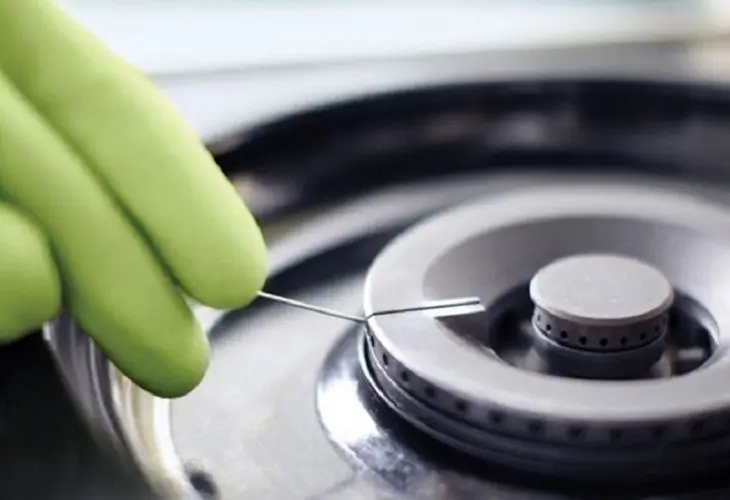
Step 5: Clean the Gas Stove Surface
Mix warm water and white vinegar in a 1:1 ratio. Apply the solution to the stovetop and leave it for about 5 minutes to soften the grease, then wipe it with a microfiber cloth.
For stubborn grease, apply a baking soda paste, leave it for about 10 minutes, and wipe it clean.
Cleaning tips based on the surface material:
Glass: Do not use steel wool. Use a soft cloth or sponge.
Stainless steel: Wipe in the direction of the metal grain and avoid chlorine-based cleaners.
Enamel: Avoid aggressive scrubbing that could scratch the enamel coating.
Step 6: Dry and Reassemble the Stove
Dry all components with a clean cloth.
For the burner components, allow them to air-dry for another 15–20 minutes to make sure they are completely dry. Then carefully reinstall everything in its original position.
Step 7: Check the Flame
Open the gas valve and turn on the stove.
A steady blue flame is usually a sign that the stove is working properly. If the flame is yellow, uneven, or does not ignite, turn off the stove and check whether the burner is completely dry and correctly positioned.
If you smell gas, close the gas valve immediately, open the windows to ventilate the area, and contact a qualified gas technician.
Do not attempt to repair gas pipes or gas connections yourself.
How to Deal with 3 Common Gas Stove Problems
Black Burnt Grates That Won't Come Clean: Soak the grates overnight in hot water with baking soda and dishwashing liquid, then scrub them the next day.
If the stains are still there, repeat the process instead of scrubbing too aggressively, as excessive scrubbing may damage the coating.
Grease on the Kitchen Wall and Range Hood: Mix warm water with dishwashing liquid, apply it to the greasy surface, and leave it for about 10 minutes before wiping.
These areas should ideally be cleaned at the same time as the gas stove.
A Greasy and Slippery Kitchen Floor: Clean the floor with warm water and a small amount of vinegar or dishwashing liquid. Then mop again with clean water to remove any remaining residue and reduce the risk of slipping.
How Often Should You Clean a Gas Stove?
Knowing how often to clean your stove is just as important as knowing how to clean a gas stove.
Wipe the stovetop: After every use
Clean the grates: 1–2 times a week
Clean the burners and burner holes: Once a month
Deep-clean the entire kitchen: Every 2–3 months
Tip to Keep Your Gas Stove Clean for Longer: Wipe the stovetop while it is still slightly warm after turning off the flame. At this stage, grease is still soft and much easier to remove than when it has completely cooled and hardened.
When Should You Hire a Professional Cleaning Service?
Regular gas stove cleaning is something you can usually do yourself. However, there are situations when a professional cleaning service may be worth considering:
Your stove has not been deep-cleaned for a long time
Burnt-on grease has become thick and difficult to remove
You need to clean the entire kitchen, including walls, range hood, cabinets, and floors
You are preparing your home for a holiday or moving house
You don't have enough time to clean
You want to spend your weekend with your family instead
bTaskee provides hourly home cleaning services to help you take care of your home.
Taskers are verified, interviewed, assessed, and trained before joining the platform. Pricing is also displayed transparently in the app before you confirm your booking.
👉 Book a home cleaning service with bTaskee

Frequently Asked Questions About How to Clean a Gas Stove
1. What is the easiest way to clean a gas stove?
Soak the grates in warm water with baking soda and dishwashing liquid for around 30–60 minutes. Then scrub them with a baking soda paste. Soaking helps soften burnt residue and reduces the amount of scrubbing needed.
2. Can I use vinegar and baking soda together to clean a gas stove?
Yes, but they should be used correctly. Sprinkle baking soda over the dirty area first, then add a small amount of vinegar to create a fizzing reaction that can help loosen dirt.
Avoid mixing large amounts of both ingredients in advance because they can largely neutralize each other.
3. Why won't my gas stove ignite after cleaning?
The most common reason is that the burner components are still damp. Incorrect reassembly can also prevent the stove from igniting.
Remove the affected parts, dry them completely, and carefully reinstall them in the correct position.
4. Why is my gas stove flame yellow instead of blue?
A yellow flame is often caused by clogged burner holes or other combustion issues.
Gently clean the burner holes and make sure the burner is correctly positioned. If the problem continues, contact a qualified technician.
5. Can I use steel wool to clean my gas stove?
Avoid using steel wool on glass, stainless steel, or enamel surfaces because it can cause scratches.
For cast-iron grates, follow the manufacturer's cleaning instructions and avoid excessive scrubbing.
6. How often should I deep-clean my gas stove?
A deep clean every 2–3 months is a good general guideline, combined with wiping the stovetop after every use and cleaning the grates 1–2 times a week.
Conclusion
How to clean a gas stove doesn't have to be difficult. The key is simple: soak first, scrub later.
With basic ingredients such as baking soda, vinegar, and dishwashing liquid, you can remove grease and tackle stubborn burnt residue without spending hours scrubbing.
Most importantly, always prioritize safety. Turn off the gas supply, wait until the stove is completely cool, and make sure every component is completely dry before putting it back together.
And if your kitchen needs more than just a quick clean, let the professionals handle it.
👉 Download the bTaskee app and book your home cleaning service in just a few minutes.
Share this post!